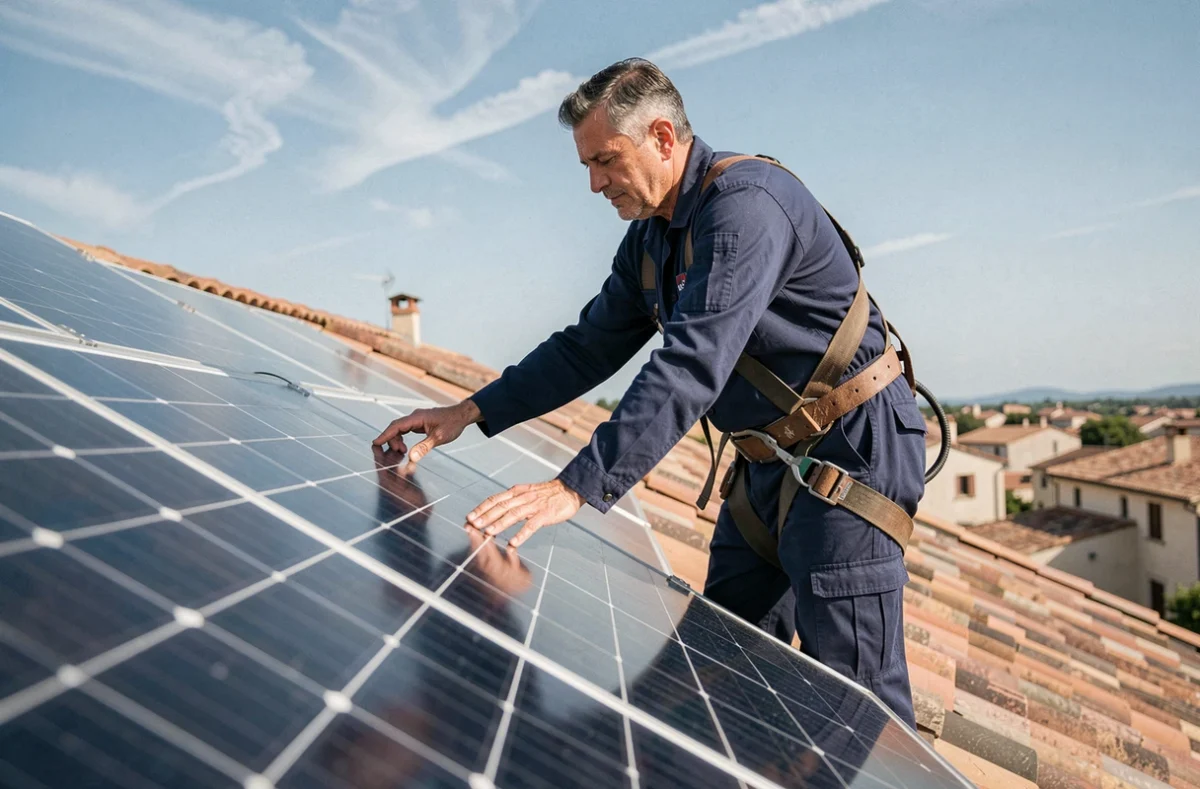
The S21 tariff decree, which came into effect on June 1, 2026, has reshaped the economic conditions of residential photovoltaics in France. The removal of the self-consumption bonus and the drop in the surplus buyback rate to 1.1 euro cent per kilowatt-hour change the profitability logic for small solar installations. This regulatory break affects both individuals and installers.
It is part of a broader context where the prices of solar ground tenders are reaching historically low levels.
S21 Tariff Decree: Removal of the Self-Consumption Bonus and New Buyback Rate
Until June 5, 2026, an individual equipped with photovoltaic panels for self-consumption with surplus injection received a bonus and a buyback rate of about 4 euro cents per kilowatt-hour. The S21 decree, applicable to complete connection requests submitted from that date, removes the self-consumption bonus and nearly divides the buyback rate by four.
Files submitted before June 5 retain the old conditions. Projects submitted after this deadline must contend with a surplus that yields almost nothing.
The news on Energie O’ Solr details the practical consequences of this decree for residential and professional project holders.
The profitability of a residential installation now relies on the ability to maximize direct self-consumption. Managing electrical usage to coincide with solar production, or resorting to battery storage, becomes crucial.
A household that consumes most of its production still derives a net benefit from its installation. In contrast, one that injects heavily into the grid sees its return on investment significantly lengthen.
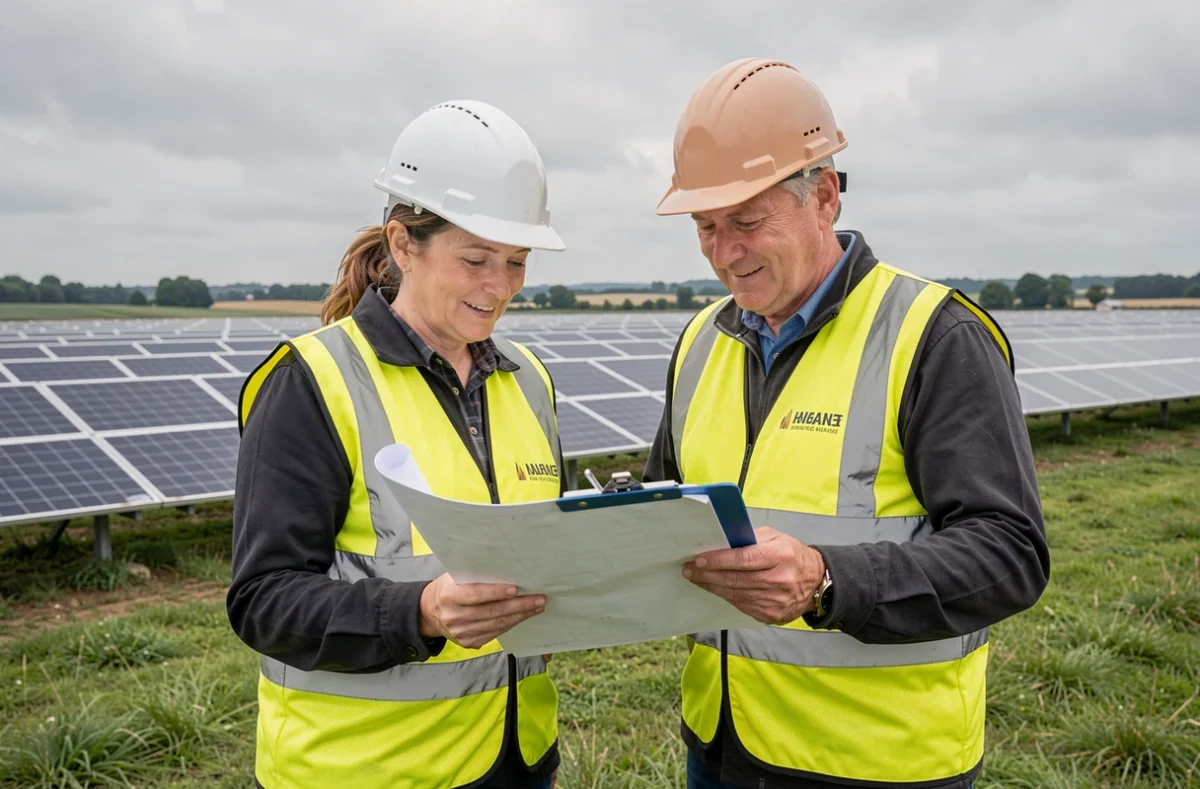
Ground Solar Tenders: Prices Drop Below 62 Euros per Megawatt-Hour
The ninth period of the ground solar tender PPE2 shows a weighted average price of €61.33/MWh. The previous session was set at €79.48/MWh, marking a decline of over 22% in just one cycle.
The competition was fierce. Over 8.3 GWc of projects applied for 925 MWc sought, a subscription ratio exceeding nine.
Ground solar has fallen below wholesale electricity market prices. If market prices remain above the guaranteed rate, these contracts could eventually generate a financial return for the state instead of burdening public finances.
Small Photovoltaics: Confirmed Oversubscription and Price Decline
The simplified PPE2 tender dedicated to small photovoltaics follows the same trajectory. 2,952 files were submitted for 963 MWc, while the sought volume was only 288 MWc.
The average price of the winners reaches €75.48/MWh, down 14.9% compared to the previous period. 871 projects were selected, with a cumulative power of 288.31 MWc.
This segment, which covers medium-sized rooftop installations, remains more expensive than ground solar. However, its price curve is following the same downward trend.
Parking Solarization: Active Obligation, Postponement Under Strict Conditions
The obligation to solarize outdoor parking lots remains in effect. A recent decree outlines the conditions for a possible deadline extension, but this is not automatic.
- The decree specifies the technical characteristics that installed panels must meet to benefit from the additional time.
- Detailed justifications are required: a simple commitment to carry out the work is not sufficient.
- The use of panels manufactured in Europe is one of the criteria for accessing the postponement, linking the solarization policy to the industrial resilience of the European photovoltaic sector.
This regulatory aspect makes parking lots a lever for industrial policy. The origin criteria of the panels direct sourcing choices towards European manufacturers, altering the conditions for supplier consultations.
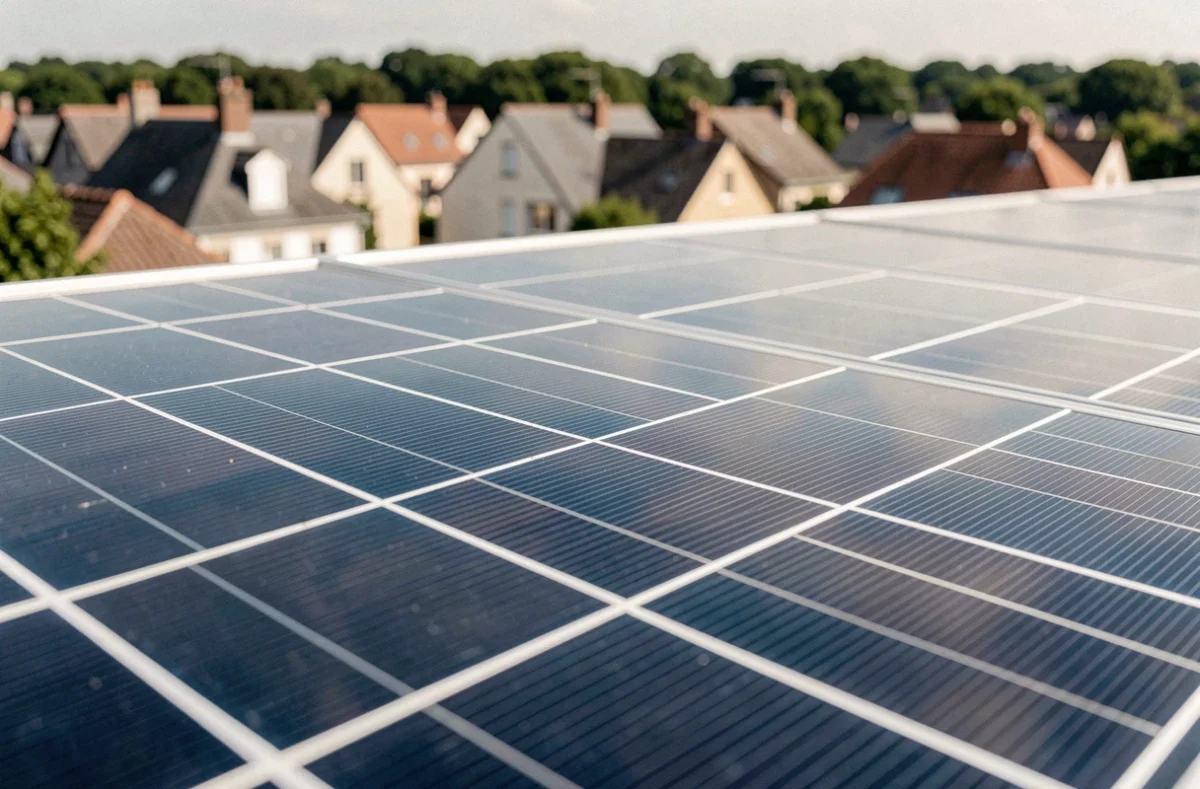
Tertiary and Industrial Buildings: Mandatory Solarization and Strategic Sizing
Regulations are gradually imposing solarization of the roofs of new or renovated buildings in the tertiary and industrial sectors. The surface thresholds triggering this obligation tend to lower over time.
For operators of commercial, logistical, or industrial buildings, the question of sizing becomes central. Installing the strict regulatory minimum or oversizing to self-consume a significant portion of the production does not involve the same calculation, especially since the buyback rate reform.
Large-scale tertiary projects retain the option to apply for tenders to obtain a guaranteed rate. More modest installations must integrate the new tariff framework and structure their model around on-site consumption.
Storage and Management: The Profitability Parameters of Residential Photovoltaics
With a surplus that is almost unremunerated for small installations, domestic battery storage and intelligent equipment management take a central role in the economic equation of a solar project.
- Management involves shifting energy-intensive consumption (water heaters, electric vehicle charging, appliances) to solar production slots.
- Battery storage retains energy produced during the day for evening use, reducing dependence on the grid.
- Combining both approaches can raise the self-consumption rate well beyond what an installation achieves without active management.
The profitability of a residential solar project is now calculated based on the self-consumption rate, not on the injected volume. This shift in logic requires installers to integrate management solutions from the design phase.
The French solar market operates on two distinct registers. Large ground and rooftop installations access competitive tender prices, sometimes lower than wholesale market prices. Residential installations must absorb the end of direct aid and focus on maximizing self-consumption. The announced expansion of solarization obligations and the tightening of panel origin criteria will continue to transform the sector in the coming months.