
A gentle slope along a low wall, a flowerbed edge wedged between two slabs, a fence post overrun by grasses: it is in these areas that the mower does not go, and the trimmer becomes the tool that makes the difference. Choosing the right model starts with identifying these specific nooks in your garden, then adapting the motorization, cutting system, and ergonomics to the reality of the terrain.
Nylon line or blade: the cutting system changes according to the vegetation
People often start by comparing motorizations, while the real starting point should be the type of vegetation to be cut. A nylon line is suitable for common finishes on soft grass, along a lawn maintained every week. As soon as the grass becomes tall and fibrous, for example around a flowerbed left fallow or at the edge of a vegetable garden, a blade provides a cleaner result and puts less strain on the motor.
Replacing the line with a blade is not trivial. The diameter of the blade and the accessories must correspond to those allowed by the model’s manual. Installing an unapproved disc increases vibrations and can damage the casing. Before purchasing, check if the trimmer accepts both systems or if it is limited to the line.
Another detail that is often overlooked: a line that is too long degrades performance. It puts more strain on the motor, amplifies vibrations, and widens the debris projection area. The best practice is to let the integrated cutting device adjust the length, without manually pulling the line beyond the specified limit.
Detailed comparisons can be found on specialized sites, and the product sheets compiled on taille-bordure-warrior.com help verify the line/blade compatibility before making a decision.

Battery, corded, or gas trimmer: adapting the motorization to the terrain
The choice of motorization depends less on the total area of the garden than on the distance between the electrical outlet and the areas to be trimmed. A corded model remains the lightest and quietest, perfect for a city garden where the lawn edge runs alongside a terrace just a few meters from the house.
The battery trimmer frees you from cable constraints. It is the right choice when you need to move from one flowerbed to another, navigate around a garden shed, or follow a distant fence. However, autonomy varies greatly depending on the battery voltage and the thickness of the vegetation. In dense grass, the battery drains faster than you might think.
Storing the battery in winter without degrading it
A point often ignored: winter storage of the battery affects reliability in spring. Leaving a lithium-ion battery to fully discharge for several weeks can reduce its capacity. Manufacturers recommend storing it partially charged, in a dry place at moderate temperature.
The gas model retains its place on difficult terrains, steep slopes, or long edges to be treated in one go. It is heavier, noisier, and requires regular engine maintenance (filter, spark plug, mix). It is reserved for situations where neither the corded nor the battery models are sufficient.
Trimmer ergonomics: weight, handle, and adjustable head
Trimming edges for half an hour with a poorly balanced tool results in forearm pain and an uneven finish. Ergonomics comes down to three concrete points:
- The actual weight in working order (including battery), which determines fatigue over a full trimming session around the garden
- The adjustable secondary handle, which allows you to adapt your grip depending on whether you are working standing on flat ground or leaning along a wall
- The adjustable or tiltable head, which prevents you from having to contort yourself to trim neatly under a hedge or along a paved surface
A telescopic handle provides real comfort for edges close to the ground. It allows you to work without bending down, which makes a noticeable difference when trimming multiple flowerbeds in succession. Feedback varies on this point: some find the telescopic handle less precise, while others would never go back.
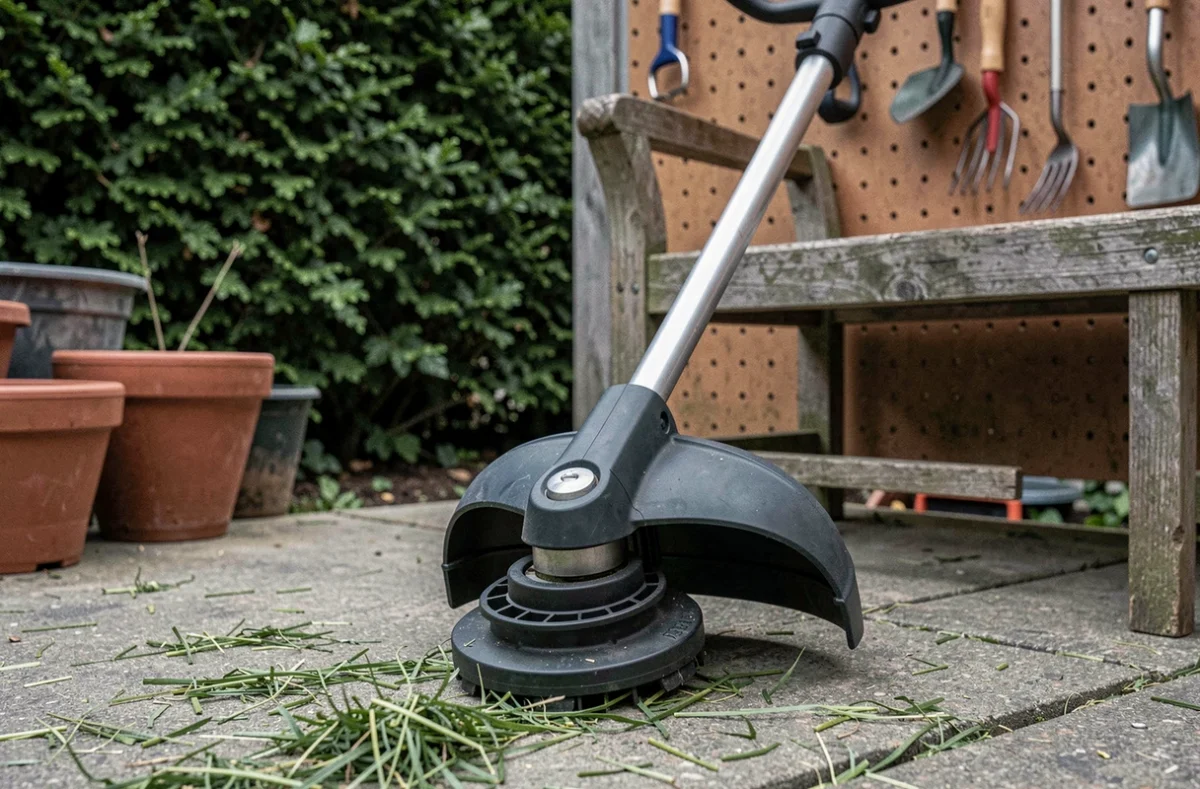
Repairability and lifespan: what to check before purchasing
A trimmer that breaks down after two seasons and for which you can no longer find the line spool or protective casing is a wasted purchase. Checking the availability of spare parts before buying avoids this situation.
In France, the repairability index covers certain electric garden tools, but available sources do not confirm that it systematically applies to all trimmers. The approach remains the same: consult the manufacturer’s documentation, check that wear parts (spool, line, casing, handle) are referenced and orderable, and see if the manufacturer publishes repair tutorials.
- Availability of consumables (nylon line, replacement spool) on the manufacturer’s site or at garden centers
- Presence of an exploded diagram in the manual, indicating that the manufacturer anticipates maintenance
- Warranty covering the battery separately from the tool body, a point often distinct in the general conditions
A model from a well-known brand with parts available for several years may cost a bit more at purchase, but is cheaper over five seasons of garden maintenance than a disposable model replaced every two years.
The choice of trimmer boils down to three concrete decisions: line or blade depending on the vegetation, motorization according to the terrain configuration, and ergonomics based on the time spent trimming. Checking repairability before pulling out the credit card is the gesture that transforms an impulsive purchase into a reliable tool for several years of clean edges around the lawn and flowerbeds.