
The mileage displayed on the odometer of a used motorcycle remains the first filtering reflex for most buyers. A low number reassures, while a high number drives them away. However, this quick reading masks the essential: the actual condition of a machine depends as much on its maintenance as on the number of kilometers traveled.
Motorcycle mileage and type of engine: thresholds that are not equal
Comparing the odometer of a single-cylinder trail bike to that of a flat-twin touring bike makes little sense. An inline twin designed for touring can handle distances much greater than those of a high-revving four-cylinder sportbike. The type of use weighs as much as the mechanics: a motorcycle primarily ridden on the highway at a steady speed ages less quickly than an identical machine confined to short urban trips, where the engine often runs cold.
Field reports vary on this point, as two motorcycles displaying the same mileage can show very different levels of wear. Knowing when to worry about motorcycle mileage therefore requires going beyond the simple number and cross-referencing several concrete indicators.
Visible wear of components: what the odometer doesn’t tell
A low mileage does not protect against a heavily used or poorly maintained motorcycle. A physical inspection remains the most reliable filter before any purchase.

Priority inspection points
- The grips, gear selector, and footpegs that are polished or worn indicate intensive use, even if the odometer shows few kilometers. A worn switch button is worth more than a number.
- The condition of the chain and sprockets gives a direct indication of the actual mileage. Very worn sprockets on a recently advertised motorcycle signal an inconsistency. Conversely, a new chain and sprockets on a machine presumed to have been lightly ridden deserve a question to the seller.
- Brake discs, pads, and tires wear proportionally to use. Significant wear on a motorcycle showing low mileage is a concrete warning sign.
- The condition of the seat (compressed foam, worn seams) and micro-scratches on the tank at knee contact points reflect the time spent in the saddle, not just the kilometers.
The engine hot, not cold
Starting the engine cold allows you to check for abnormal noises (knocking, whistling). However, it is when the engine is hot that the real defects appear: an oil seepage at the level of the seals or the crankcase after about ten minutes of operation points to advanced wear. A slipping clutch under load or a gearbox that sticks between gears confirms underestimated mileage or neglected maintenance.
HistoVec and motorcycle technical inspection: documentary tools to leverage
Since April 15, 2024, technical inspections apply to L-category vehicles in France. For a motorcycle over five years old sold to a private individual, the seller must provide a report less than six months old. This document can reveal safety defects that are not directly related to mileage but shed light on the overall condition of the machine.
The HistoVec service, accessible online, gathers the mileage readings taken during successive technical inspections. A decrease in mileage between two readings constitutes a strong indicator of fraud. A significant discrepancy between the HistoVec figure and the maintenance invoices presented by the seller raises the same suspicion.
The HistoVec report can only be consulted if the seller shares the link. A refusal to transmit, or the absence of any maintenance documentation, represents a signal in itself: documentary opacity weighs as much as a suspicious odometer.
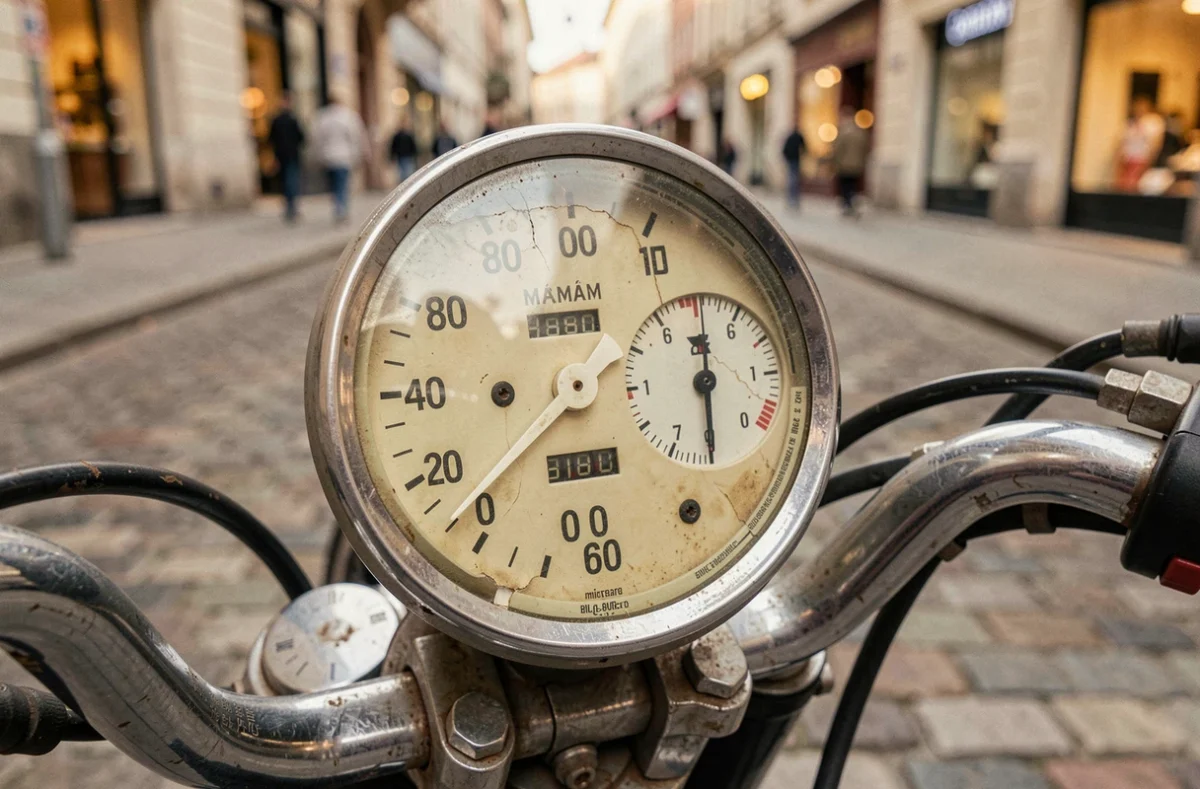
Odometer fraud: why motorcycles remain vulnerable
Modifying a motorcycle’s electronic odometer remains technically accessible. Unlike recent cars, where mileage data is sometimes stored in multiple control units, many motorcycles only have a single memory point. Electronic cross-referencing is therefore more difficult, and manipulation is easier to carry out.
The maintenance booklet stamped by a professional, invoices for wear parts (tires, chain, pads), and the HistoVec report form a much more reliable documentary bundle than the odometer number alone. Cross-referencing these elements takes time, but it is the only method that withstands well-executed fraud.
Details to check on invoices
Each maintenance or repair invoice normally mentions the mileage at the time of the intervention. By aligning these readings chronologically, any inconsistencies become apparent. An abnormal progression gap between two invoices calls for an explanation from the seller. The complete absence of invoices over several years of use is equally telling.
The motorcycle technical inspection, even recent, does not guarantee that the odometer is accurate. It certifies a mechanical and safety condition at a given moment. It is the consistency between all documents, the observed physical wear, and the displayed mileage that allows one to form a well-founded opinion. Missing any one of these three pillars is enough to justify caution.