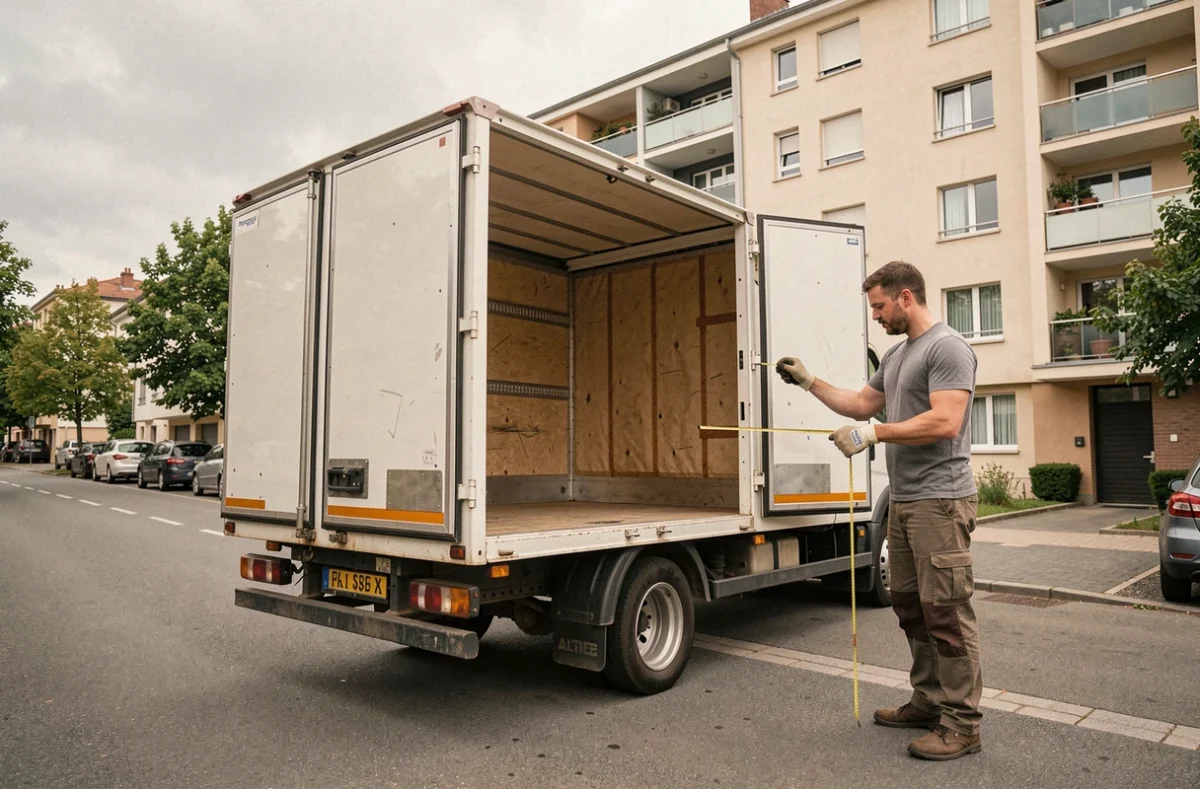
An 11 m³ truck is the least well-documented mid-size option offered by rental companies. Sitting between the standardized 10 m³ and the 14 m³, which falls into the large van category, the 11 m³ uses cargo bodies based on different platforms depending on the manufacturer. This makes direct comparisons unreliable unless you measure the vehicle itself.
11 m³ cargo area: actual dimensions and differences between models
The “11 m³” designation is a marketing term. Actual usable volume ranges from 10.5 to 11.8 m³, depending on the shape of the cargo area, the presence of wheel arches and the thickness of the insulated walls on some refrigerated models converted for short-term rental.
In most rental fleets, the cargo area has a usable length of between 3.10 and 3.40 m, an interior width of 1.75 to 1.85 m and a ceiling height of 1.85 to 2.00 m. These ranges are indicative: we recommend checking the technical specifications for the vehicle you are assigned, as two trucks from the same rental company labeled “11 m³” can differ in length by 20 cm.
To get a clear picture of the interior dimensions of an 11 m³ truck, you also need to measure the rear opening. The loading sill height above the ground (often between 55 and 75 cm) determines whether you need a tail lift or ramp, while the width between the uprights limits the passage of bulky furniture to around 1.50 m.
The interior wheel arches take up floor space. In an 11 m³ truck with twin rear wheels, the floor width narrows by around 15 cm at the axle. This can make all the difference when loading long items flat, such as a bed base or worktop.
Payload and GVW: the limit that volume doesn’t reveal
For an 11 m³ truck, weight—not available volume—is the limiting factor. Vehicles in this category generally have a gross vehicle weight (GVW) of 3.5 tonnes, keeping them within the scope of a standard Category B driving licence. To calculate the actual payload, subtract the vehicle’s unladen weight (chassis, cargo body, fuel and driver) from its GVW.
Payload varies considerably between models. Some cab-chassis trucks with an aluminium box body can carry more than a tonne. In a heavier converted van, payload can drop below 900 kg. Section F.2 of the registration document shows the GVW, while section G.1 shows the unladen weight: the difference is the maximum load, including passengers.
- A standard box of books (55 x 35 x 30 cm) weighs between 20 and 25 kg. Fifty boxes of this type already use almost all of a 1,000 kg payload, while taking up only a third of the available volume.
- A standard fridge-freezer weighs between 60 and 80 kg, while a washing machine with its counterweight often weighs more than 70 kg. Three appliances of this size already account for more than 20% of the payload.
- Flat-pack furniture (bookcases, chests of drawers) is light for its size—the opposite of a box of dishes. Loading the furniture first and the heavy boxes last lets you adjust the load as you go.
How to make the most of an 11 m³ truck: loading method
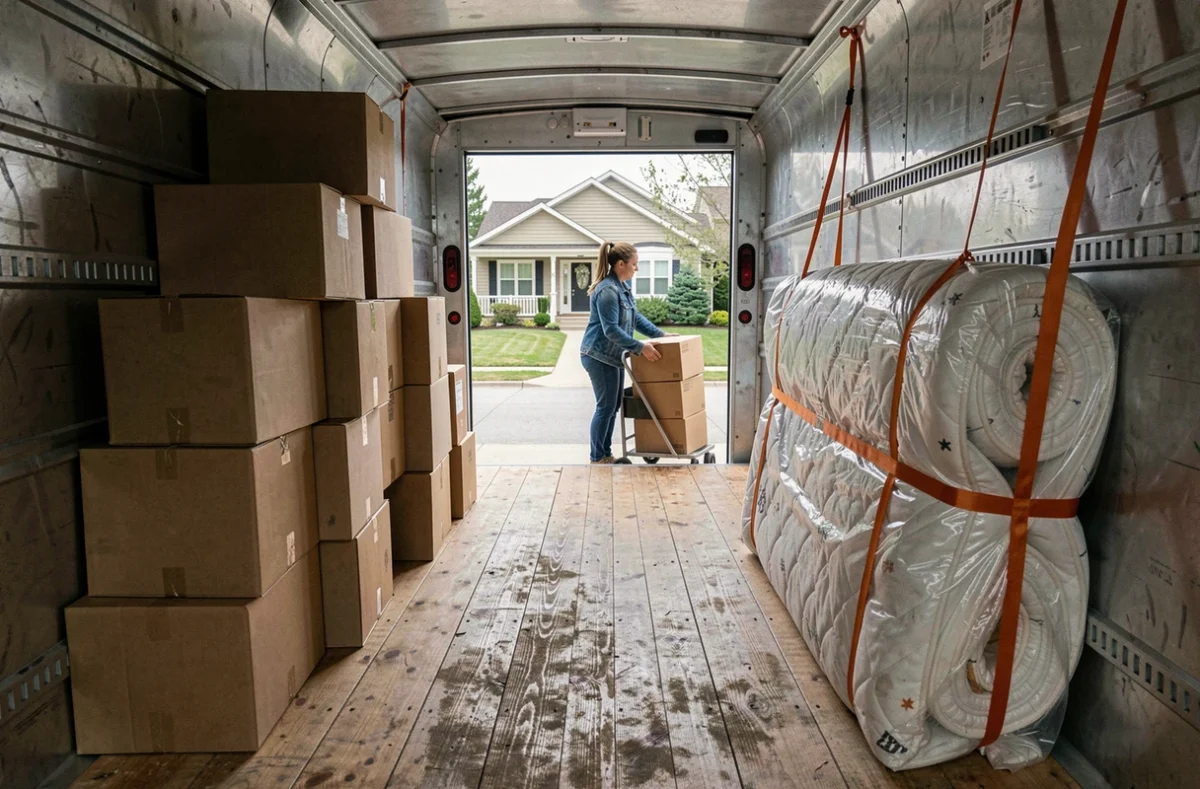
Loading an 11 m³ truck is like building a wall. Start by stacking a vertical row against the front wall of the cargo area (the cab partition), then work towards the rear doors, adding one layer at a time.
Weight distribution and stability
Place the heaviest items on the floor, against the cab partition. This lowers the vehicle’s centre of gravity and distributes the load evenly across the rear axle. Appliances, boxes of books and toolboxes should go here first.
Disassembled furniture (bed frames, tabletops, wardrobe doors) can be secured vertically along the side walls. This creates a supporting structure for the boxes stacked in the middle.
Securing the load: requirements and anchor points
Securing the load is not optional. The Highway Code requires loads to be blocked or fastened so they cannot shift during sudden braking. Most rental 11 m³ trucks have anchor points on the floor and walls for ratchet straps.
Items placed higher up (light boxes, duvets, bags of clothes) fill gaps and apply gentle pressure to the layers below. Leaving empty spaces at the top of the cargo area risks the load tipping over at the first sharp turn.

Category B licence and an 11 m³ truck: check before you set off
An 11 m³ truck with a GVW of no more than 3.5 tonnes can be driven with a standard Category B licence. Above this limit, you need a C1 or C licence. Most mainstream rental companies offer 11 m³ trucks with a GVW of 3.5 tonnes, but some professional configurations (tail lift, double floor) make the vehicle heavier and push its GVW over the limit.
Before signing the rental agreement, checking the registration document for the vehicle you have been assigned is the only reliable way to be sure. The truck’s commercial name guarantees neither its actual volume nor its GVW.
A well-loaded 11 m³ truck can handle a move from a two- or three-room apartment in a single trip, provided you dismantle bulky furniture and stay within the payload limit. For a larger home, make a second trip or choose a larger vehicle rather than overloading the truck, which compromises braking and causes premature tyre wear.