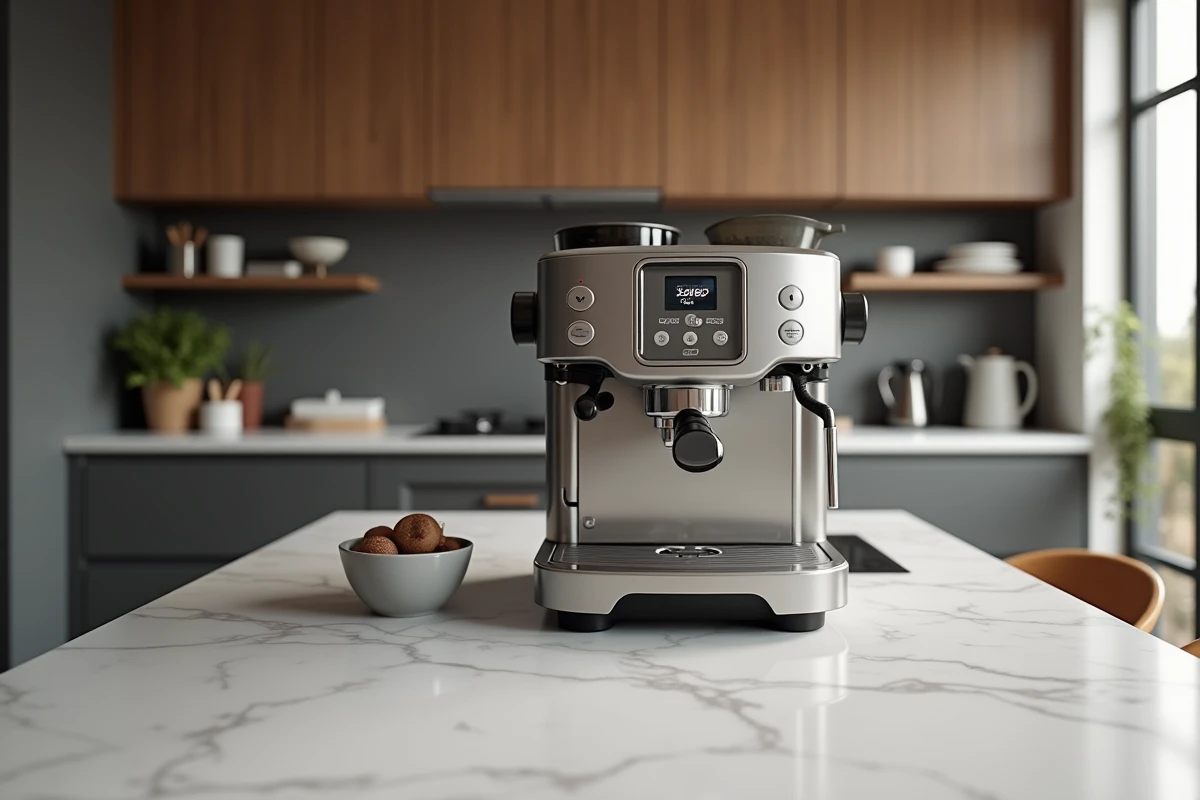
The Saeco Picobaristo Deluxe features a compact hydraulic circuit that heats water at high pressure to extract coffee. This circuit accumulates limescale at a variable rate depending on the hardness of the water used. Descaling this machine is not just about following an alert on the screen: the frequency, the chosen product, and the method all influence both the quality of the coffee and the longevity of the internal components.
Over-descaling the Saeco Picobaristo: an underestimated risk
Official guides emphasize the dangers of under-descaling, and for good reason: limescale reduces flow, lowers extraction temperature, and degrades the taste in the cup. Conversely, the opposite problem is rarely documented.
Repairers and resellers of used Picobaristo Deluxe machines note that too frequent descaling weakens rubber seals and certain plastic parts of the hydraulic circuit. The consequences appear in the medium term: micro-leaks, increased pump noise, or even failure of the percolation group.
Descaling solutions are acidic by nature. When used more often than necessary, they attack sealing materials. The machine signals the need for descaling based on an internal counter that considers the number of cycles and the set water hardness.
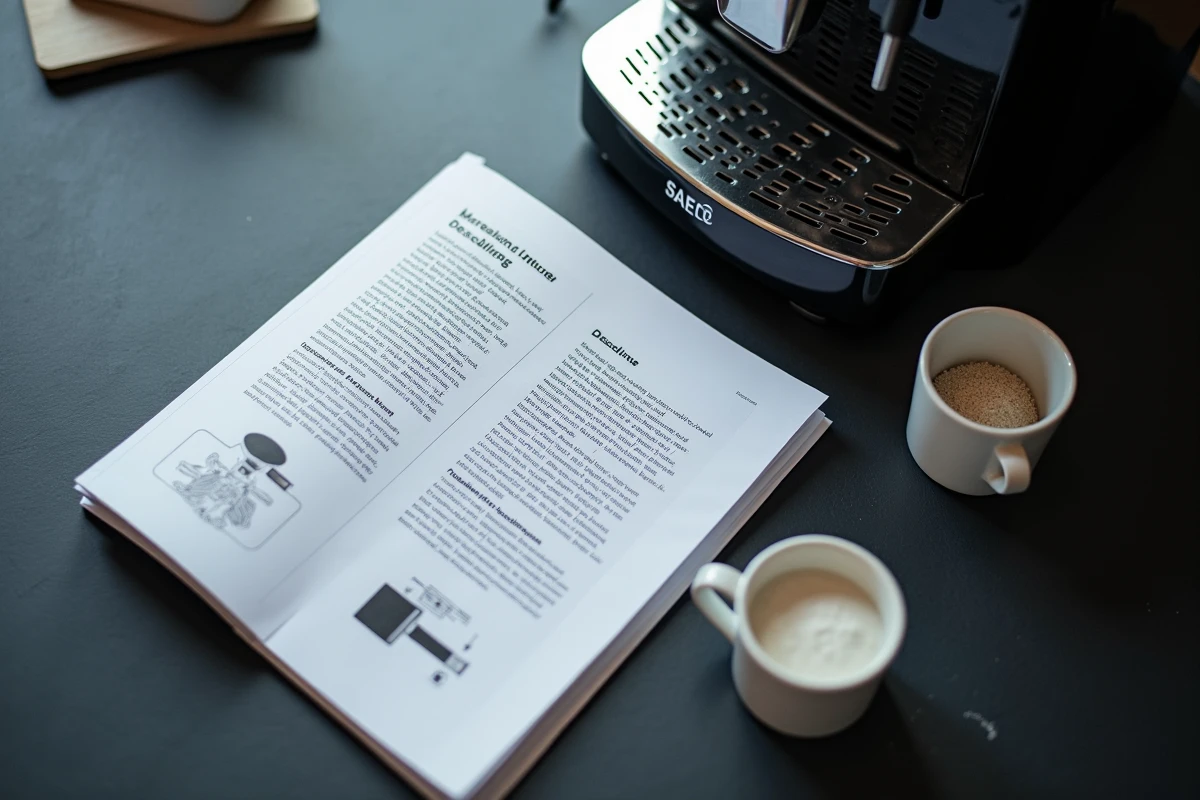
If this hardness setting does not match your actual water, the alert triggers too early or too late. It is useful to consult the descaling and user manual for Saeco Picobaristo Deluxe to correctly calibrate this parameter before starting a cycle.
Water hardness and actual descaling frequency
The water hardness setting in the Picobaristo Deluxe menu directly modifies the threshold for triggering the descaling alert. Most users leave the factory setting, which corresponds to moderately hard water.
If your water is soft (as in some regions supplied by mountain springs), the internal counter requests descaling well before limescale becomes a real problem. Conversely, in areas with very hard water, the factory setting may underestimate the actual buildup and allow limescale to accumulate in the circuit.
Testing hardness before setting
The Picobaristo Deluxe usually comes with a test strip. Dip it into a glass of tap water, wait a few seconds, then compare the result with the scale printed on the packaging. Then enter the corresponding value in the machine’s settings menu.
This test takes less than a minute. It prevents two scenarios: unnecessary descaling (and wear on the seals) or waiting too long (and allowing limescale to clog the fine conduits of the percolation circuit).
Saeco Picobaristo descaling products: what works and what damages
The recommended descaler by the manufacturer is the CA6700 from Philips, a lactic acid-based solution formulated for Saeco machine circuits. Its dosage is calibrated to dissolve limescale without attacking seals or internal metal parts.
White vinegar is not recommended for Saeco machines. Its acidity varies depending on concentration, making dosage unpredictable. It also leaves a persistent odor in the circuit, difficult to eliminate even after several rinses. Field reports vary on this point: some users report years of vinegar use without apparent issues, but specialized technicians observe accelerated wear of seals in machines maintained this way.
- The CA6700 Philips descaler remains the safest choice for the Picobaristo Deluxe, compatible with the machine’s hydraulic circuit.
- Universal descalers based on citric acid work, but their concentration varies from brand to brand, complicating dosage.
- White vinegar, despite its low cost, poses a real risk to long-term sealing.
Neglected Saeco Picobaristo machine: catching up on overdue descaling
Machines purchased used or left without maintenance for several months pose a specific problem. Limescale accumulated over a long period hardens and forms compact deposits that a single standard descaling cycle is not enough to dissolve.
Specialized technicians recommend in these cases a thorough descaling in several consecutive cycles. The procedure involves restarting the descaling program two or three times in a row, without prolonged intermediate rinsing, to maintain contact between the acidic solution and the most stubborn deposits.
When descaling alone is no longer enough
If the machine shows persistent signs after several cycles (lukewarm coffee, abnormally slow flow, unusual pump noise), the problem likely exceeds simple limescale. A professional cleaning of the coffee group and milk circuit may be necessary. Standard manuals do not detail this situation, as they assume regular maintenance since purchase.
In a context of intensive use (office, shared space), the frequency of descaling and cleaning of the milk circuit increases significantly compared to typical home use. Temperature issues and foam quality appear more quickly on these machines used daily by many users.
AquaClean filter and descaling: two complementary maintenance tasks
The AquaClean filter reduces limescale in the water before it reaches the heating circuit. It does not eliminate the need for descaling but spaces out the frequency. After each descaling cycle, the AquaClean filter must be replaced or reactivated for the machine’s internal counter to reset correctly.
Forgetting this step skews the calculation for the next descaling. The machine continues to count as if the filter were new when it has lost some of its filtration capacity. The result: a descaling requested too late, with limescale already installed in the conduits.
Maintaining the Picobaristo Deluxe relies on a balance between descaling, filtration, and cleaning the milk circuit. Each operation affects the others. A worn filter accelerates limescale buildup, aggressive descaling wears out seals, and a clogged milk circuit alters taste long before limescale is to blame. Adapting each action to your water and usage rhythm remains the best way to preserve the machine over time.