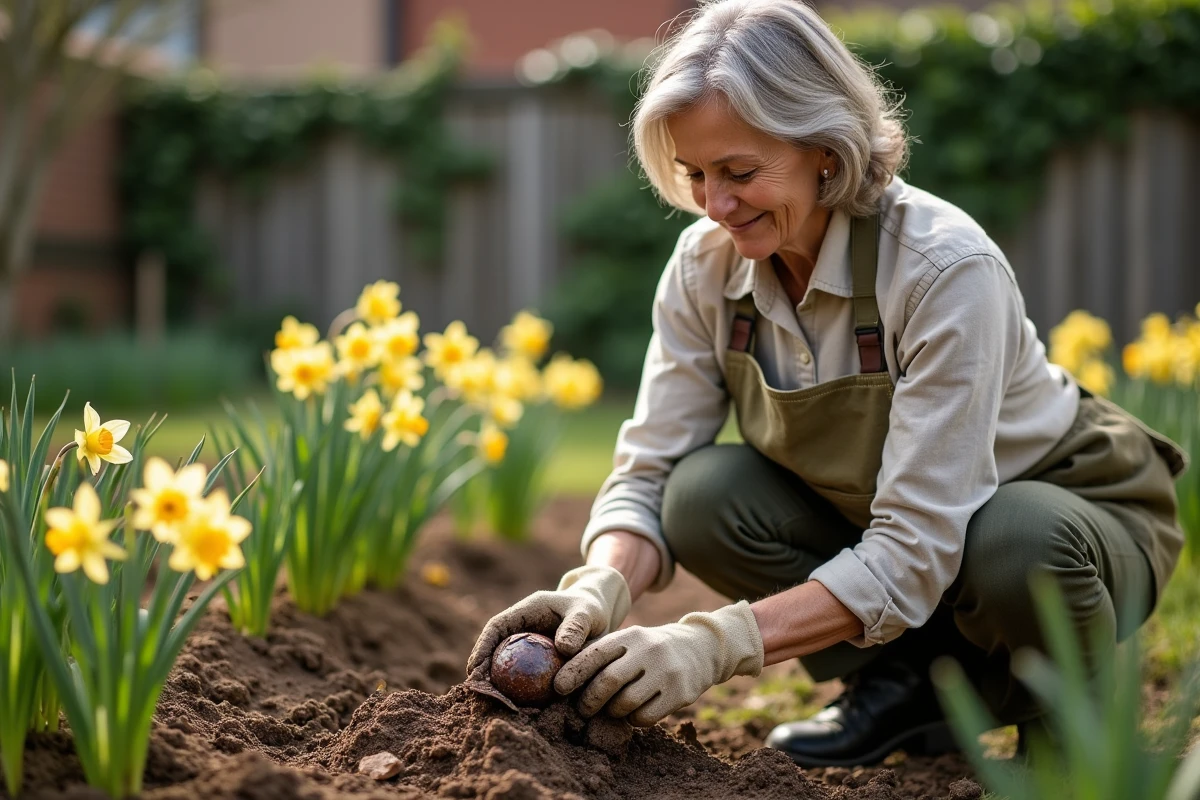
Removing or leaving daffodil bulbs in the ground after flowering: the answer depends less on a universal rule than on the actual condition of your flower beds. Several measurable factors, such as the density of the clumps, soil quality, and flowering frequency, help make the decision. This article compares the two approaches to determine in which cases removal is justified and in which cases it does more harm than good.
Daffodil bulbs left in the ground or removed: a comparison of the two approaches
The majority of amateur gardeners instinctively remove their bulbs without assessing whether the operation is truly necessary. The table below summarizes the concrete differences between the two practices.
| Criterion | Bulbs left in the ground | Bulbs removed and stored |
|---|---|---|
| Recommended frequency | Indefinite (as long as flowering remains satisfactory) | Every 3 to 5 years, in case of overcrowding or decreased flowering |
| Risk of loss | Low (the soil acts as a natural cold storage) | Higher (drying out, mold if storage is poorly managed) |
| Soil compaction | No additional impact | Foot traffic and handling increase compaction |
| Labor cost | Almost none | Significant (digging up, sorting, drying, storing) |
| Health risk (toxicity) | Limited (bulbs out of reach) | Increased (possible confusion with kitchen onions, access for children/pets) |
This comparison highlights a clear point: leaving the bulbs in place remains the safest strategy as long as flowering does not visibly decline over several consecutive springs. As detailed in Envies de Jardin’s gardening advice, extraction is really only justified in cases of confirmed overcrowding or a significant decrease in flowering.
Toxicity of daffodil bulbs: a risk exacerbated by unnecessary handling
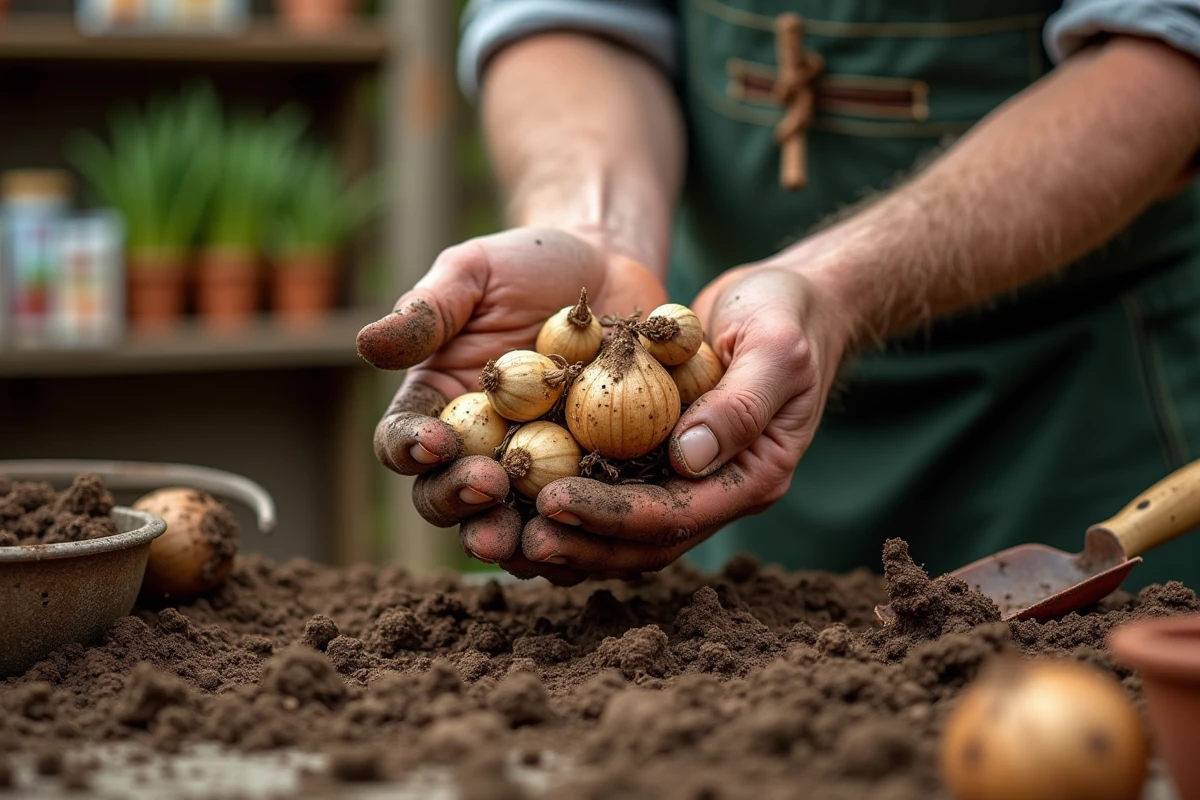
Daffodil bulbs contain lycorine, an alkaloid toxic to humans and pets. Several botanical gardens and poison control centers have reminded in recent years that multiplying digging operations increases the risks of confusion with kitchen onions.
The classic scenario: extracted bulbs, dried in a garage or cellar, then forgotten next to food supplies. A child or pet can easily access them.
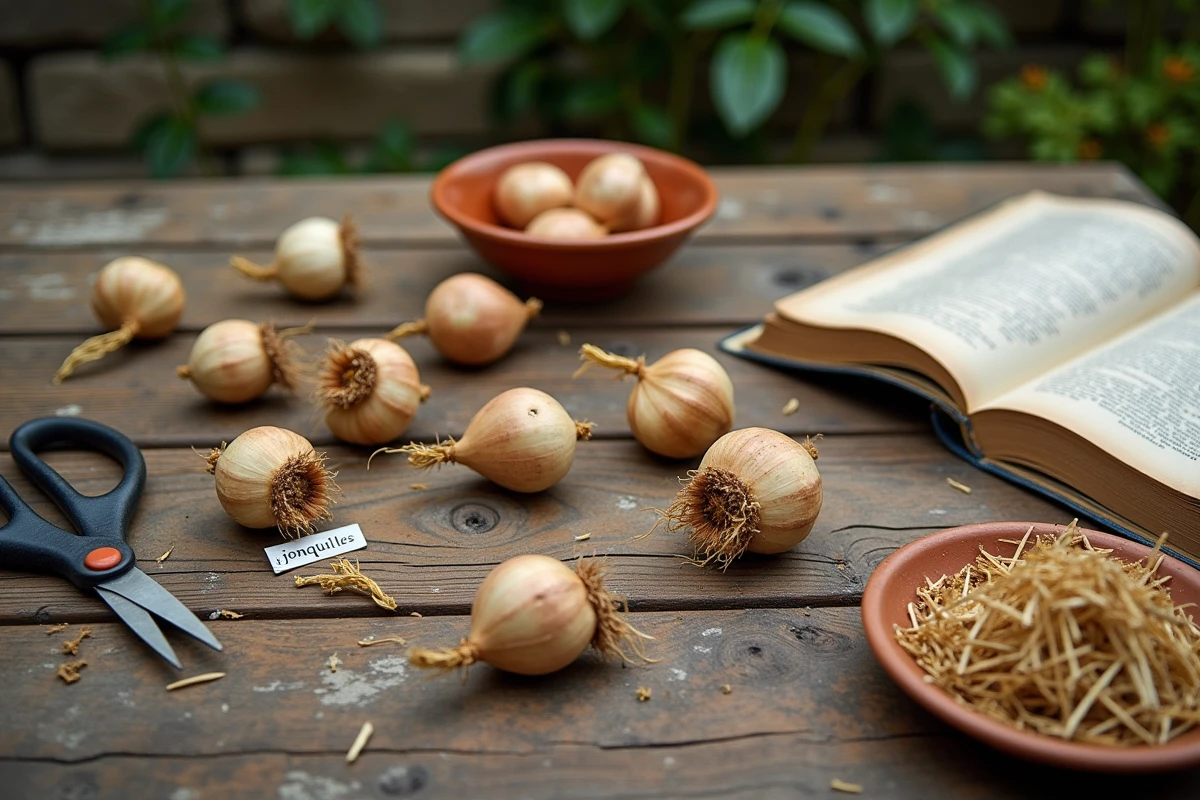
- Bulbs stored above ground should be clearly labeled and kept in a closed container, out of reach of children and pets
- Handling with bare hands can cause skin irritation in sensitive individuals; wearing gloves is preferable
- In case of accidental ingestion (nausea, vomiting), contact a poison control center immediately
Limiting diggings to what is strictly necessary mechanically reduces these risks. If your daffodils bloom properly each year, the safest handling is the one you don’t do.
Concrete signs that justify removing daffodil bulbs
Digging only makes sense in the face of observable symptoms. Two main situations make it relevant.
Overcrowding of clumps after several years
When daffodils form very dense clumps, the bulbs compete for nutrients and water. The visible result: smaller, fewer flowers, sometimes absent on certain clumps. This phenomenon generally appears after several years without division.
In this case, digging up the bulbs after the foliage has completely yellowed allows for separation and replanting with sufficient spacing. The foliage must have completely yellowed before extraction, as green leaves continue to nourish the bulb for the next flowering.
Confirmed decrease in flowering over several springs
One year without flowers is not enough to justify digging. Daffodils can “skip” a season due to climatic reasons or excess nitrogen in the soil. However, if the decrease repeats over two or three consecutive springs, the problem likely stems from density or soil depletion.
Before removing the bulbs, check that the foliage has not been cut too early in previous years. Cutting the leaves before they are fully yellowed deprives the bulb of its reserves and often explains the decrease in flowering by itself.
Post-flowering gesture for daffodils: what really matters in the garden
Rather than focusing on digging, two simple gestures after flowering have a direct impact on the quality of the next spring.
The first: remove faded flowers as soon as they wilt, by cutting the flower stem below the flower. This operation prevents the plant from dedicating its energy to seed production. The energy is then redirected to the bulb.
The second: do not touch the foliage for six to eight weeks after flowering. The leaves, even unsightly, ensure photosynthesis that replenishes the bulb’s reserves. Impatient gardeners who mow or tie the leaves in a “ponytail” directly compromise the flowering of the following year.
- Remove faded flowers to prevent seed formation
- Allow foliage to yellow naturally for at least six weeks
- Avoid tying or braiding the leaves, which reduces the photosynthesis surface area
- If the appearance is bothersome, plant large-leaved perennials nearby to mask the yellowing leaves
The soil acts as a natural cold storage for daffodil bulbs. Poorly managed amateur storage, in a room that is too warm or subject to temperature fluctuations, increases the risks of drying out and loss of viability. Leaving the bulbs in the ground provides them with more stable conditions than most garages or cellars.
For the vast majority of gardens, removing daffodil bulbs remains an unnecessary operation as long as flowering is maintained. The two important gestures, removing faded flowers and respecting the yellowing of the foliage, are sufficient to ensure a reliable return of daffodils each spring. Digging only becomes relevant after several seasons of visible decline and should then be accompanied by strict precautions regarding the toxicity of the bulbs.