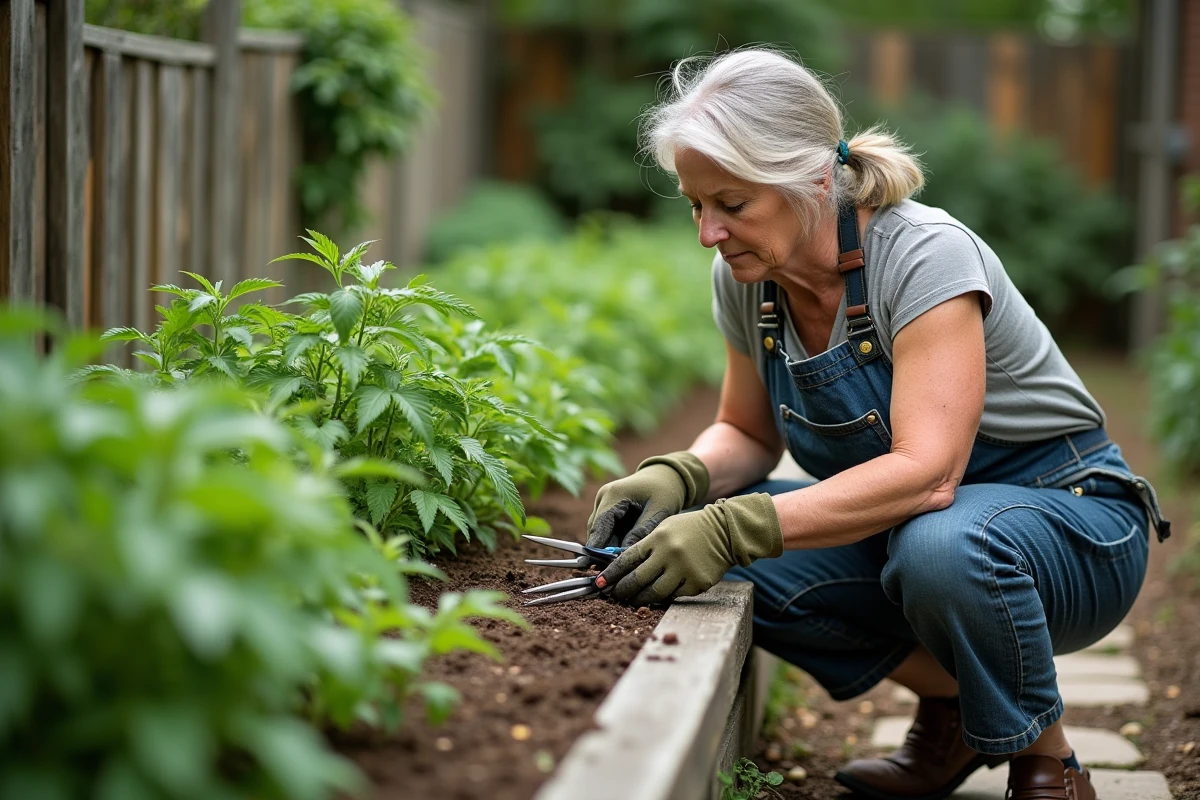
An identical vegetable garden calendar for all of France produces very uneven results depending on whether you garden on clay soil in Brittany or on limestone terrain in Provence. Annual maintenance of the vegetable garden becomes more effective when it incorporates local constraints, from soil type to watering restrictions, rather than following a generic seasonal schedule.
Adapting vegetable garden maintenance to water restrictions and local climate
Prefectoral orders limiting water use multiply every summer in several French departments. Planning your sowing and harvesting without considering these restrictions means preparing a vegetable garden where part of the production will be compromised when the vegetables need it most.
The first variable to integrate is the nature of the soil. Clay soil retains water longer but cracks during prolonged drought. Sandy soil drains quickly and requires more frequent inputs. Adapting mulching, watering frequency, and crop choices to this reality radically changes the yield at the end of the season.
To go further in this approach, a guide to annual vegetable garden maintenance helps structure each intervention based on your actual context.
The second variable is the climatic history of your area. Late frosts, early heatwaves, or hail episodes do not strike at the same time from one region to another. Consulting the data from your local weather station over the past three years provides a planting calendar that is much more reliable than a national table.
Soil type and vegetable garden maintenance: how soil composition changes things
The composition of the soil conditions almost all maintenance decisions, from when you turn the soil to the type of amendment you provide. Grouping the main differences in a table allows for a quick visualization of the necessary adjustments.
| Soil Type | Water Retention | Soil Work | Recommended Amendment | Suitable Mulch |
|---|---|---|---|---|
| Clay | High (risk of compaction) | Avoid working in waterlogged soil | Mature compost, coarse sand | Straw, fine wood chips |
| Sandy | Low (quick drainage) | Easy to work all year round | Compost, well-decomposed manure | Grass clippings, fallen leaves |
| Limestone | Medium (quick drying on the surface) | Crusts over in dry weather | Acidic organic matter (heather soil) | Pine bark, thick mulch |
| Silty | Good (but possible compaction) | Compacts easily under rain | Coarse compost, green manures | Structural mulch (branch chips) |
Mulching is the most cost-effective intervention in terms of time spent on a vegetable garden. Regardless of the soil type, a layer of organic matter on the surface reduces evaporation, limits weeding, and gradually nourishes the soil.
On clay soil, mulching prevents the formation of a hard crust in summer. On sandy soil, it slows drainage and keeps the area around the roots cool. The difference in yield between a mulched vegetable garden and a bare soil garden becomes visible from the first year.
Seasonal soil maintenance: when and how to intervene based on your region
The vegetable garden maintenance calendar deserves to be shifted by several weeks depending on your geographical area. Mediterranean regions start sowing in the ground well before northeastern regions, but face summer water stress that imposes different choices in summer.
Preparing the soil after winter
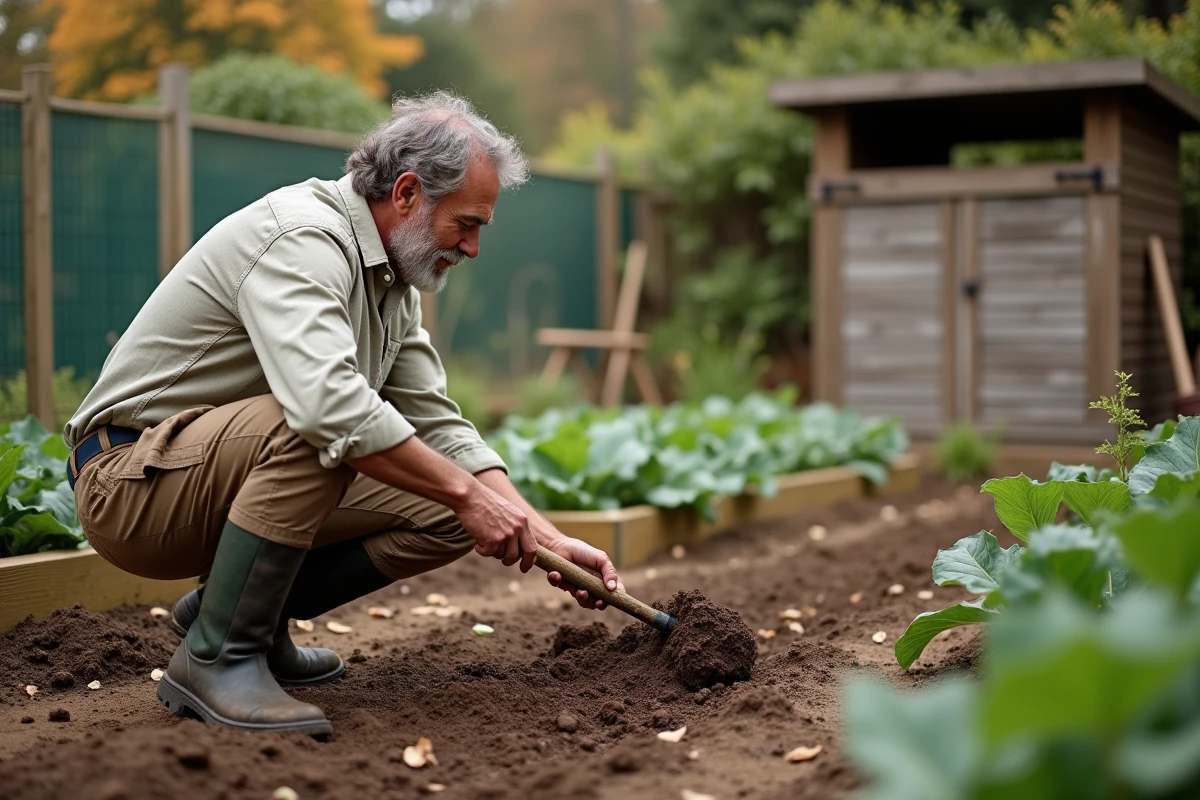
Wait until the soil no longer sticks to the tools before working it. In clay soil, forcing tilling on waterlogged ground destroys the structure and creates compact clumps that will take months to break apart. A simple test is to form a ball of soil in your hand: if it breaks apart easily, the soil is ready.
Adding compost ideally takes place at this time, by scratching the surface a few centimeters. Incorporating deeply undecomposed organic matter into cold soil slows mineralization and can cause a temporary nitrogen hunger for young plants.
Managing water during summer restrictions
When watering in the garden is limited by prefectoral order, several levers can help maintain production:
- Water early in the morning (before eight o’clock) to limit evaporation, targeting the base of the plants rather than the foliage
- Install oyas or inverted bottles at the base of the most water-hungry vegetables (tomatoes, zucchinis, eggplants) to slowly diffuse water into the soil
- Favor drought-resistant vegetable varieties, such as certain heirloom tomato or bean varieties suited to hot climates
- Consistently mulch between rows with a sufficient thickness to keep the soil cool to the touch beneath the mulch layer
Targeted watering at the base consumes much less water than overhead watering, and plants absorb it more efficiently. During restrictions, this single habit can make the difference between a decent harvest and stressed plants.
Crop rotation and soil health: planning over several years
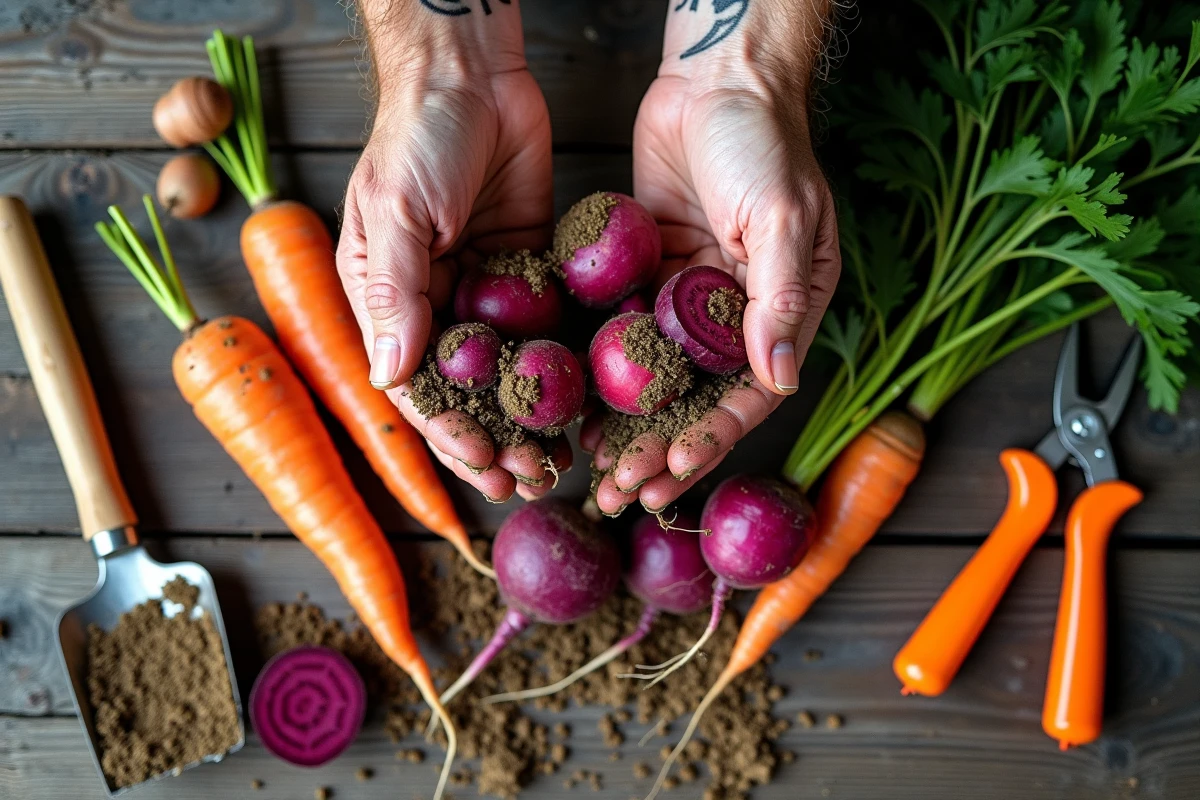
Annual maintenance of the vegetable garden is not limited to the current season. Crop rotation over three or four years reduces the pressure from soil-borne diseases and balances nutrient extraction in the soil. Planting tomatoes in the same spot every year depletes the soil of specific elements and encourages the accumulation of pathogens.
The principle is to follow a nutrient-demanding crop (tomatoes, squash) with a less demanding crop (lettuce, radishes), then with legumes (beans, peas) that fix atmospheric nitrogen in the soil. This natural cycle decreases the need for fertilizers and improves soil structure over the years.
In autumn, sowing a green manure (phacelia, mustard, clover) on the released plots protects the soil from winter erosion and adds organic matter to be buried in the following spring. A permanently covered soil is a soil that degrades less quickly, whether due to frost, wind, or heavy rains.
The maintenance of the vegetable garden that yields the best results over time is based on this logic: observing your soil, understanding the climatic constraints of your plot, and adjusting each action accordingly. A productive vegetable garden is not one that follows the best calendar, but one where the gardener knows their soil.